
How to squat on the toilet?
Click on the ‘video’ link above to watch the 30 second video ‘stepping onto the Lillipad’ .
You can either lift the seat, which will give you more room, or squat with the seat down. You can squat with your feet fully on the footpads (good if you prefer a wider stance), or with your heels on the rim of the toilet and your toes on the Lillipad (good if you prefer a narrower stance, and it is easier to balance). Some people like to sit on the toilet seat with their feet up on the footpads or the step. And some people will use a combination of these positions depending on how flexible they are feeling.
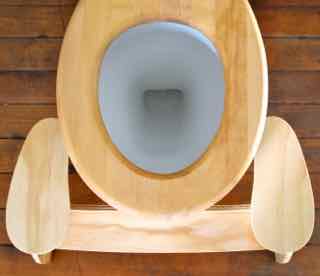
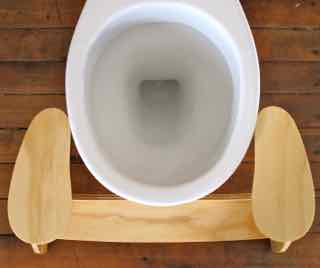
Only go to the toilet if you feel your body’s urge to, and go when you feel that urge. Don’t go because you have just had your cup of tea, brushed your teeth, and now it is your 10 minute allotted toilet time ⎼ listen to your body : )
Before squatting (especially in the morning) it is good to do some stretching. Try lifting each foot in turn behind your back with your hand to stretch your thighs.
A handrail, wall, solid bathroom furniture or the back of a chair may provide support.
The best way to get onto the Lillipad is to step backwards placing the toes of one foot onto the front inside section of a footpad. Squat down until the heel of your foot rests on the footpad and your full weight is supported by that foot, then lift the other foot into position.
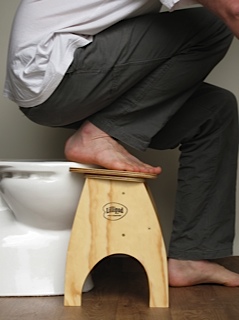
Alternatively, the toes can rest on the footpad and the heel of your foot on the rim of the toilet. Experiment to find the best position for you but give yourself a few weeks to adjust to squatting and your Lillipad.
The feet in the picture are size 13! Foot size is not an issue (notice his toes simply hang over the front of the footpad). If you wear shoes the sole will support your toes.
With some practice you can actually leave your trousers around your ankles during these manoeuvres without mishap.
Ensure that the toilet is secure and in good condition before transferring your weight onto the toilet rim.
Using the step
Try raising your feet onto the step while sitting on the toilet and lean forwards. This position provides similar benefits with little effort. The Lillipad footstool is also available for this purpose. It provides a step up for children and something for their feet to push against if they sit on the toilet.
Children
Is it necessary to discourage toddlers from squatting so soon to ‘toilet train’ them? Can you find a potty or re–use a plastic container that encourages your toddler to squat rather than sit? How about using toilet paper to line a suitably sized container. Children and adults who can’t leave floor level have managed successfully with this system.
When ready, children are generally light enough to squat on the toilet seat. However, if they are sitting, it is best for them to rest their feet on the step, it gives them something to push against. When finished, with the aid of the step on the Lillipad, children are able to reach up and flush the toilet.

© 1991 - 2024 Robert Wait, Lillipad Ltd.